Coming soon on Amazon.

What Does a Cat's Slow Blink Mean? The Truth
When a cat slow blinks at you, they are offering something rare — their trust. Discover what it really means and what ancient Egyptians understood about the cat's gaze.
EDUCATION
Pet Glyph
6/1/20264 min read
Your cat is sitting across the room. They are watching you with that particular calm they reserve for moments when they have decided you are worth paying attention to.
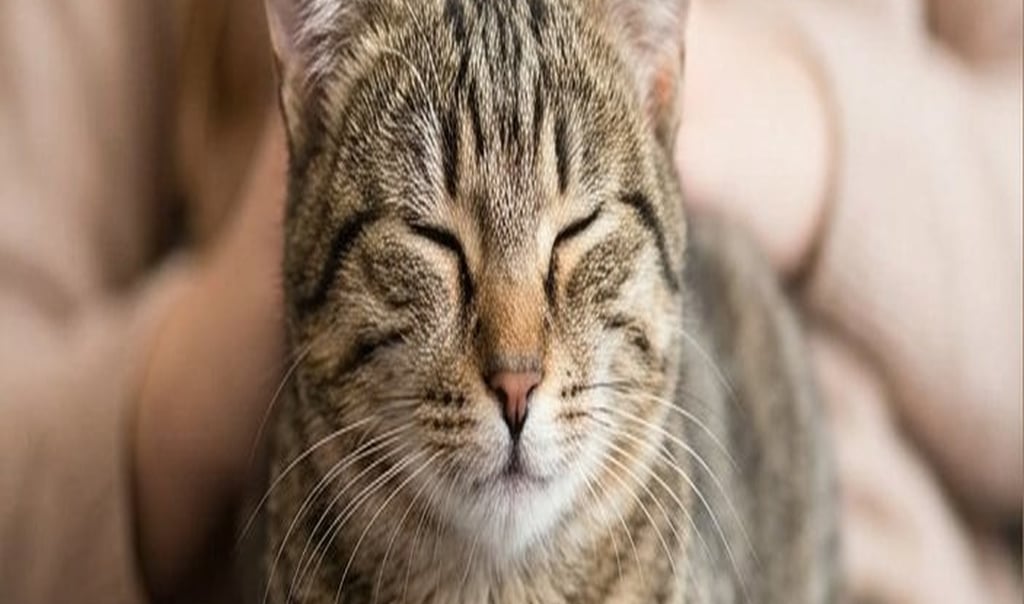
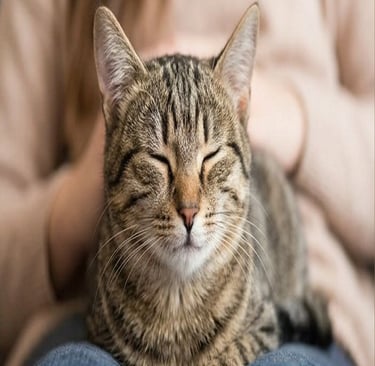
Then, slowly, deliberately — they close their eyes halfway and open them again.
You have just been slow-blinked. And it means more than you might think.
The Feline Equivalent of a Smile
A slow blink from a cat is one of the most significant things they can offer you.
In a species that communicates almost entirely through body language, the slow blink is a deliberate signal. It says: I am relaxed. I feel safe. I trust you enough to close my eyes in your presence.
For an animal that is both predator and prey — one whose survival in the wild depends on constant alertness — choosing to close their eyes near another being is an act of profound vulnerability. When your cat slow blinks at you, they are not being lazy or sleepy. They are being brave.
What the Science Says
In 2020, researchers at the University of Sussex and the University of Portsmouth published the first peer-reviewed study specifically examining the cat slow blink. The findings confirmed what cat owners had long suspected:
Cats slow-blink more frequently at humans who slow-blink at them. When a human initiates a slow blink, cats are significantly more likely to approach that person compared to a person who maintains a neutral expression.
The study also found that cats were more likely to slow blink at their owners than at strangers — suggesting the behaviour is specifically linked to established trust rather than general sociability.
The slow blink, in other words, is a conversation. And you can participate in it.
How to Slow Blink Back
This is perhaps the most remarkable finding from the research — the slow blink is bidirectional. Humans can initiate it, and cats respond.
Here is how to do it correctly:
Make soft eye contact. Do not stare — a hard, unblinking stare is a threat signal in cat language. Relax your face and look at your cat with soft, slightly unfocused eyes.
Blink slowly. Close your eyes about halfway — not a full blink, but a deliberate, unhurried half-close. Hold for a moment, then open slowly.
Wait. Give your cat time to respond. Do not rush or repeat immediately. Let the silence sit.
Watch for the response. Many cats will slow blink back. Some will look away — which is also a positive signal in cats, meaning they are comfortable enough to disengage. A cat that looks away from you is not ignoring you. They are relaxing.
The slow blink exchange is one of the most intimate things you can do with a cat you are meeting for the first time. It communicates, in the most direct terms available across species, that you mean no harm.
The Difference Between a Slow Blink and Drowsiness
Cats blink when they are tired. They blink when their eyes are dry. They blink when something has startled them and they are resetting.
The slow blink is different. It is deliberate. It is directed — at you, specifically. The cat's body will be relaxed but alert, not heavy with sleep. Their gaze will find yours before the blink happens, as if making sure you are watching.
You will know the difference when you see it. There is an intentionality to a slow blink that drowsiness does not carry.
Ancient Egyptians and the Sacred Gaze
The eyes of the cat were considered sacred in ancient Egypt.
Bastet — the cat goddess — was depicted with the eyes of a cat: alert, luminous, all-seeing. The Eye of Bastet was a symbol of protection, perception and divine awareness. Cats were believed to see what humans could not — spirits, dangers, truths hidden in plain sight.
Ancient Egyptians did not have access to peer-reviewed studies on feline communication. But they paid close attention to the animals they shared their lives with. And what they saw — a creature whose gaze held deliberate intention, whose eyes communicated meaning beyond what words could carry — they honoured accordingly.
The slow blink was almost certainly observed. The reverence the Egyptians held for the cat's gaze was not accidental.
When your cat slowly blinks at you, they are continuing a conversation that began five thousand years ago.
What to Do With This Knowledge
Understanding the slow blink changes how you see your cat.
The moments when your cat settles near you and half-closes their eyes are not incidental. They are chosen. They are offered to you specifically, by an animal that does not offer trust easily or thoughtlessly.
Slow blink back. Every time. Let them know you received the message.
Notice when it happens. Is it after a meal? In a particular spot? When the house is quiet? The slow blink often comes in moments of particular safety and contentment — and those moments tell you something about what your cat values in their environment.
Never force eye contact. The slow blink only works in the context of softness. A stare undoes everything. Let the cat lead.
Try it with cats you do not know. The University of Sussex research found that slow blinking works even with unfamiliar cats — making it one of the most powerful tools for building trust with a new or anxious animal.
One Last Thing
The next time your cat looks at you and slowly, deliberately closes their eyes —
Know that you are being told something important.
You are safe. You are trusted. You are, in the most feline sense of the word, loved.
Not every species is capable of saying that. Yours does it with their eyes.
At Pet Glyph, We Pay Attention
Pet Glyph was founded on the belief that truly caring for an animal begins with truly understanding them. The ancient Egyptians built an entire mythology around what they observed in cats. We carry that practice of attention forward.
Our collection is coming soon. Join the inner circle for early access.
Ancient Wisdom. Modern Pets. Timeless Care.
— Pet Glyph


PetGlyph
Check our Social Media!
Contact
Newsletter
info@petglyph.com
© 2024. All rights reserved.